
Introduction
In modern manufacturing, accuracy, efficiency, and consistency are essential. One of the most important elements that makes this possible is the Press Tool. From automotive parts to household appliances, press tools play a critical role in shaping metal components with speed and precision. Without them, mass production as we know it would be nearly impossible.
A press tool is more than just a piece of equipment—it is the foundation of high-quality metal forming and large-scale production.
What Is a Press Tool
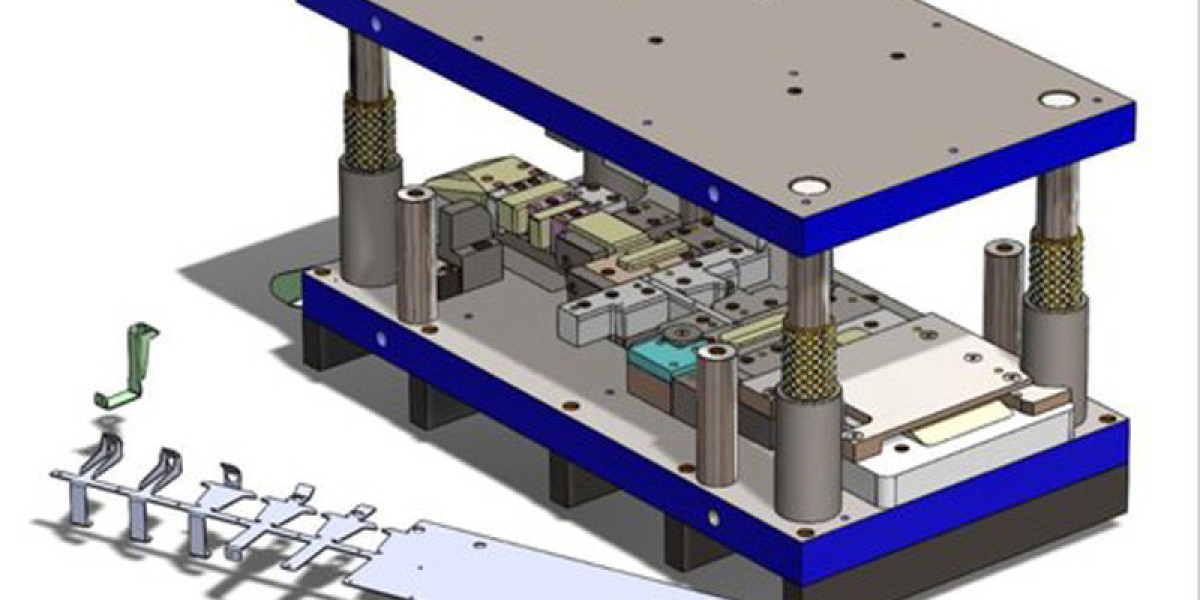
A press tool is a specialized device used in combination with a mechanical or hydraulic press to cut, bend, form, or shape metal sheets. It consists of various components such as punches, dies, guide pillars, and plates that work together to transform raw metal into finished or semi-finished parts.
Press tools are widely used in industries where precision and repeatability are required. Each tool is designed to produce identical parts, ensuring uniformity across thousands or even millions of components.
Importance of Press Tool in Manufacturing
The success of any metal fabrication process depends heavily on the quality of the press tool. A well-designed press tool improves productivity, reduces material waste, and ensures dimensional accuracy.
Key benefits of using a press tool include:
High-speed production
Consistent product quality
Reduced labor costs
Improved safety
Efficient use of raw materials
Because of these advantages, press tools are essential in competitive manufacturing environments.
Types of Press Tools
Press tools come in a variety of forms, each intended for a particular function. Understanding these types helps manufacturers choose the right tool for their application.
Blanking Tool
Used to cut flat shapes from sheet metal. The removed piece is the desired product.
Piercing Tool
Creates holes in metal sheets without removing the entire section.
Bending Tool
used to bend metal sheets into desired shapes or angles.
Forming Tool
Changes the shape of the metal without cutting it, often used for complex contours.
Progressive Press Tool
Performs multiple operations in a single press stroke, increasing efficiency and production speed.
Each type of press tool serves a unique purpose, making them versatile and adaptable to different production needs.
Press Tool Design and Precision
The design of a press tool is a highly technical process. Engineers must consider material type, thickness, press capacity, tolerances, and production volume. Even a minor design flaw can lead to defects, tool damage, or production downtime.
Modern press tool design often uses CAD and simulation software to predict performance and identify potential issues before manufacturing begins. This approach saves time and reduces costly errors.
Applications of Press Tool
Press tools are used across a wide range of industries due to their efficiency and accuracy.
Common applications include:
Automotive components such as brackets and panels
Electrical parts like connectors and terminals
Home appliances and kitchen equipment
Aerospace components
Industrial machinery parts
Wherever metal parts are produced in large quantities, press tools are almost always involved.
Materials Used in Press Tools
Press tools are typically made from high-strength tool steels that can withstand extreme pressure and repeated use. The choice of material depends on factors such as production volume, type of metal being processed, and expected tool life.
Heat treatment is often applied to press tool components to enhance hardness, wear resistance, and durability. This ensures long service life and consistent performance.
Maintenance of Press Tools
Proper maintenance is essential to keep a press tool functioning efficiently. Regular inspection helps detect wear, cracks, or alignment issues before they cause production problems.
Maintenance practices include:
Cleaning after each production cycle
Lubrication of moving parts
Periodic sharpening of cutting edges
Replacement of worn components
Well-maintained press tools not only last longer but also produce higher-quality parts.
Press Tool vs Other Manufacturing Methods
Compared to casting or machining, press tools offer faster production and lower per-unit costs for high-volume manufacturing. While initial tool development may be expensive, the long-term savings are significant.
This makes press tools ideal for mass production where consistency and speed are critical.
Future of Press Tool Technology
With advancements in automation and smart manufacturing, press tool technology continues to evolve. Integration with robotic systems, sensors, and AI-based monitoring improves efficiency and reduces downtime.
The future of press tools lies in smarter designs, longer tool life, and more sustainable manufacturing processes.
Conclusion
The Press Tool is a cornerstone of modern industrial production. It enables manufacturers to produce high-quality metal components efficiently, accurately, and at scale. From design to maintenance, every aspect of a press tool contributes to manufacturing success.
As industries continue to demand faster production and higher precision, press tools will remain an essential technology driving innovation and efficiency in manufacturing.
See more our website:visit here