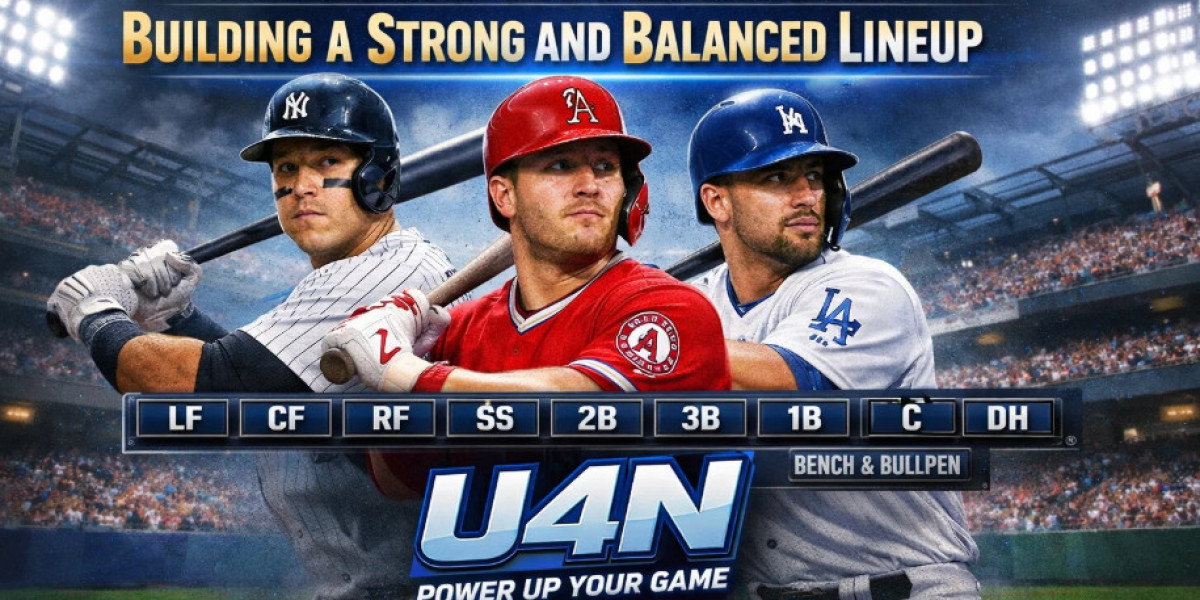

What Does a “Balanced Lineup” Actually Mean?
A balanced lineup is not just nine hitters with high overalls. It means:
A mix of contact and power
Different handedness (righty and lefty bats)
Speed in key spots
Defensive stability at premium positions
Bench players who cover weaknesses
In Ranked play, you will face a wide range of pitching styles. Some players rely on sinker-ballers. Others spam outlier fastballs or sliders away from opposite-handed hitters. If your lineup is stacked with only right-handed power hitters, you will eventually struggle against strong right-handed pitching.
Balance reduces those weaknesses. It gives you options.
How Should I Structure My Batting Order?
There’s no single perfect formula, but this structure works consistently.
1. Who Should Lead Off?
Your leadoff hitter should:
Have high contact
Have good vision and discipline
Have solid speed
Get on base consistently
Power is not required here. The goal is to see pitches, wear down stamina, and get on base. In practice, a leadoff hitter who can foul off tough pitches and draw walks makes a big difference by the fifth or sixth inning.
2. Who Should Hit Second?
The second spot should be one of your best overall hitters. In modern MLB logic (which the game reflects well), this is not a “bunt guy.” It is often a complete hitter who can hit for average and power.
This player comes up in the first inning almost every game with a chance to do damage.
3. Who Should Bat Third and Fourth?
These are your primary run producers.
High power ratings
Strong clutch
Reliable PCI size
Avoid stacking both with the same handedness if possible. If your third hitter is left-handed, try to make your cleanup hitter right-handed. This makes it harder for opponents to match up with bullpen arms late in the game.
4. What About the Bottom of the Order?
Spots 6–9 should not be automatic outs.
Many players ignore this part of the lineup. That’s a mistake. A weak 8–9 section resets momentum for your opponent.
I prefer:
At least one speed threat in the 8 or 9 spot
One contact-focused hitter who can flip the lineup over
If your 9 hitter gets on base, your leadoff hitter becomes a run-producing threat immediately.
How Important Is Handedness Balance?
Very important.
In Ranked games, most players carry:
At least two strong right-handed relievers
At least one dominant left-handed bullpen arm
If you stack five right-handed hitters in a row, your opponent can neutralize you with one bullpen move.
Ideally:
Alternate lefty and righty bats when possible
Avoid having more than three same-handed hitters in a row
Switch hitters are extremely valuable because they prevent easy bullpen matchups. They also reduce the stress of facing same-handed sliders, which are harder to track consistently.
Should I Prioritize Contact or Power?
It depends on difficulty level and your own skill.
On All-Star difficulty:
Power plays very well
Home runs are common
PCI size is forgiving
On Hall of Fame and above:
Contact and vision matter more
PCI shrinks
Timing windows get tighter
If you struggle with PCI placement, stacking pure power hitters can hurt you. In higher ranks, consistent line drives score more runs than chasing home runs.
A balanced approach works best:
Two or three true power bats
Several high-contact hitters
One or two speed-based players
How Much Does Defense Matter in Lineup Decisions?
More than most players think.
In MLB The Show 26, poor fielding ratings lead to:
Slower reaction animations
More bobbled ground balls
Weaker throwing animations
Up-the-middle defense is critical:
Catcher
Shortstop
Second base
Center field
If you sacrifice too much defense for offense at shortstop or center field, you will eventually give up extra hits in tight Ranked games.
Corner outfield and first base are more forgiving positions defensively. That’s where you can afford to hide a bat-first player.
How Should I Use My Bench?
Your bench should not be random leftovers.
I recommend:
One left-handed power bat
One right-handed power bat
One speed specialist
One defensive replacement
One versatile utility player
Late in close games, this flexibility wins games.
Example:
Down by one run in the 8th? Use a pinch hitter with high clutch.
Tie game in the 9th? Pinch run with 95+ speed.
Leading by one? Defensive substitute in center field.
Bench construction supports your starting lineup strategy.
How Do Stubs Affect Lineup Building?
Most players build their team around the cards they can afford. Managing resources matters.
Some players look for ways to earn currency efficiently and safely, including searching for terms like MLB The Show 26 stubs no ban when trying to improve their roster options. Regardless of how you acquire players, the important thing is spending wisely.
Do not spend all your stubs on one 99 overall card if it leaves the rest of your lineup weak. A balanced 92–95 overall team often performs better than a top-heavy roster with one superstar and several weak hitters.
Focus spending on:
Premium up-the-middle defenders
One or two elite bats
A reliable bullpen arm
Then fill the rest with program rewards and grindable cards.
How Do I Adjust My Lineup After Slumps?
If you’re not scoring runs, do not panic and replace half your roster immediately.
Instead:
Check your approach at the plate.
Look at batting averages over 30–40 games.
Identify who consistently makes weak contact.
Sometimes a player with high ratings simply does not fit your swing timing. Replace based on performance, not overall rating.
I’ve removed 97 overall hitters who batted under .200 for me and replaced them with 92 overall hitters hitting .330. Real performance matters more than attributes on paper.
Should I Build Around My Stadium?
Yes, especially in online play.
If you use:
A small stadium with short fences → power becomes more valuable.
A large outfield → speed and gap hitters gain value.
Some stadiums reward fly balls. Others reward line drives and speed.
Think about how your home field affects run scoring and build accordingly.
How Often Should I Change My Lineup?
Not every game.
Frequent changes prevent you from building comfort with player swings. Give hitters enough time to adjust.
I recommend:
Evaluating every 20–30 games
Tracking batting average and on-base percentage
Watching how opponents attack certain hitters
Consistency builds rhythm.
What Wins Games Long-Term?
Over time, the strongest teams share these traits:
Balanced handedness
Reliable contact hitters
Selective power bats
Strong defense up the middle
A functional bench
Building a strong lineup in MLB The Show 26 is less about chasing the highest overall cards and more about building a team that works together.
When each lineup spot has a clear role, your offense becomes more consistent. And in Ranked play, consistency wins more games than occasional explosive performances.
Focus on balance, evaluate honestly, and adjust based on real results. That approach will carry you much further than simply stacking stars.