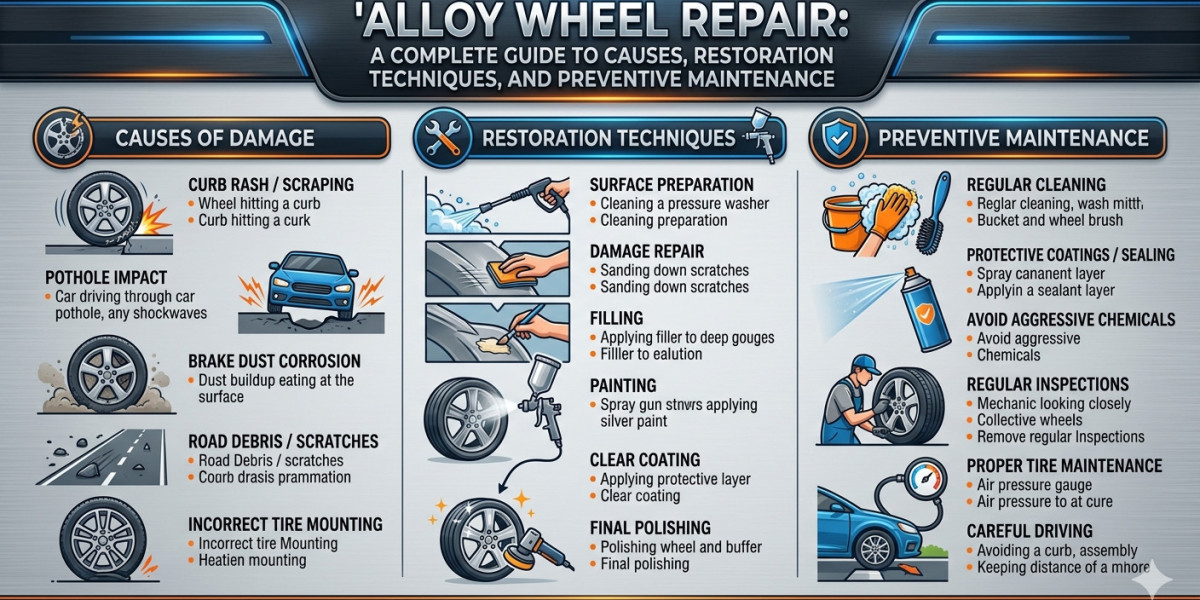

Alloy wheels are a valuable feature on modern vehicles. They improve appearance, contribute to performance, and often enhance resale value. However, everyday driving can expose wheels to damage from curbs, potholes, road debris, corrosion, and weather conditions. When damage occurs, many vehicle owners consider refurbishment rather than replacement. Understanding the factors that influence alloy wheel refurbishment cost can help drivers make informed decisions about wheel maintenance and restoration.
Refurbishment is often a cost-effective way to restore damaged wheels and improve their appearance. While costs vary depending on several factors, knowing what affects pricing can help vehicle owners plan for repairs and compare service options more effectively.
In this guide, we will explore the key factors that influence refurbishment costs, the different types of wheel repairs available, and how proper maintenance can help reduce long-term expenses.
What Is Alloy Wheel Refurbishment?
Alloy wheel refurbishment is the process of restoring damaged or worn wheels to improve their appearance and condition.
Refurbishment may involve:
Scratch removal
Curb rash repair
Corrosion treatment
Paint restoration
Powder coating
Diamond-cut refinishing
Minor structural repairs
The goal is to return the wheel to a condition that closely resembles its original appearance while extending its lifespan.
Why Drivers Choose Refurbishment
Before considering costs, it is important to understand why refurbishment is often preferred over replacement.
Improved Appearance
Refurbished wheels can significantly enhance vehicle presentation.
Cost Savings
Repairing damaged wheels is often less expensive than purchasing replacements.
Preserving Original Wheels
Many drivers prefer to retain the wheels originally supplied with their vehicle.
Environmental Benefits
Refurbishment reduces waste and supports more sustainable vehicle maintenance.
Increased Vehicle Value
Well-maintained wheels can contribute positively to resale and trade-in value.
Factors That Affect Alloy Wheel Refurbishment Cost
Several variables influence the overall price of wheel refurbishment.
Type of Damage
The severity and nature of the damage play a major role.
Minor scratches generally require less work than extensive corrosion or structural repairs.
Common damage types include:
Surface scratches
Curb rash
Paint damage
Corrosion
Bent rims
Cracks
More complex repairs typically require additional labor and equipment.
Wheel Size
Larger wheels often require more materials and labor.
As wheel diameter increases, refurbishment processes may become more time-consuming.
Wheel Design Complexity
Some wheel designs are more intricate than others.
Features that may increase refurbishment complexity include:
Multiple spokes
Detailed patterns
Complex contours
Custom finishes
More intricate designs often require additional preparation and finishing work.
Finish Type
The wheel finish has a significant impact on refurbishment procedures.
Common finishes include:
Painted finishes
Powder-coated finishes
Polished finishes
Diamond-cut finishes
Certain finishes require specialized equipment and techniques, which can affect refurbishment costs.
Number of Wheels Being Refurbished
Many vehicle owners choose to refurbish multiple wheels at the same time.
Refurbishing several wheels together may improve consistency and efficiency.
Corrosion Severity
Corrosion can vary greatly in extent.
Minor corrosion may be relatively straightforward to address, while severe corrosion often requires more extensive restoration work.
Structural Repairs
When wheels are bent or cracked, additional repair procedures may be necessary.
Structural repairs generally require:
Specialized equipment
Detailed inspections
Additional labor
These factors can influence overall refurbishment expenses.
Types of Alloy Wheel Refurbishment
Understanding available refurbishment options can help explain pricing differences.
Cosmetic Refurbishment
This focuses primarily on appearance.
Typical procedures include:
Scratch removal
Scuff correction
Paint touch-ups
Surface refinishing
Full Refurbishment
Full refurbishment involves more comprehensive restoration.
Services may include:
Complete stripping
Surface preparation
Corrosion removal
Refinishing
Protective coating application
Powder Coating
Powder coating provides a durable protective finish.
Benefits include:
Corrosion resistance
Long-lasting appearance
Strong protective layer
Diamond-Cut Refurbishment
Diamond-cut wheels require specialized machining equipment.
The process recreates the distinctive reflective finish associated with premium wheels.
Structural Restoration
Structural restoration addresses issues such as:
Bent wheels
Cracks
Deformation
These repairs often involve specialized procedures.
Why Prices Can Vary Between Service Providers
Not all refurbishment services are identical.
Several factors contribute to pricing differences.
Technician Experience
Experienced professionals may offer higher-quality results and more comprehensive services.
Equipment Quality
Advanced equipment often improves repair accuracy and finish quality.
Materials Used
High-quality paints, coatings, and repair materials can influence both cost and durability.
Service Scope
Some providers offer additional services such as:
Detailed inspections
Quality control procedures
Protective treatments
Geographic Location
Regional differences can also affect labor and operational expenses.
How to Evaluate Refurbishment Value
Rather than focusing solely on price, it is important to consider overall value.
Quality of Workmanship
Well-executed repairs often last longer and provide better results.
Finish Durability
Long-lasting finishes may reduce future maintenance needs.
Warranty Availability
Some providers offer warranties on qualifying refurbishment work.
Customer Reviews
Previous customer experiences can provide insight into service quality.
Repair Standards
Professional inspection and restoration procedures support consistent results.
When Refurbishment Is More Economical Than Replacement
In many situations, refurbishment offers significant advantages.
Cosmetic Damage
Minor scratches and scuffs are often ideal candidates for refurbishment.
Manageable Corrosion
Early-stage corrosion can frequently be treated effectively.
Retaining Original Wheels
Refurbishment helps preserve factory wheel designs.
Rare or Expensive Wheels
Replacement may be difficult or costly for certain wheel models.
Professional assessment can help determine whether refurbishment or replacement is the more practical option.
How Proper Maintenance Can Reduce Future Costs
Preventive care can help minimize the need for future refurbishment.
Clean Wheels Regularly
Routine cleaning removes contaminants that may damage finishes.
Remove Brake Dust Promptly
Brake dust can contribute to corrosion and finish deterioration.
Avoid Harsh Chemicals
Use wheel-safe cleaning products whenever possible.
Inspect Wheels Frequently
Early detection allows timely correction of minor issues.
Drive Carefully Around Hazards
Avoiding potholes and curbs helps reduce damage risk.
Common Mistakes That Increase Refurbishment Expenses
Vehicle owners sometimes unknowingly increase repair costs.
Delaying Repairs
Small issues often become more serious over time.
Ignoring Corrosion
Corrosion can spread if not addressed promptly.
Using Improper Cleaning Products
Harsh chemicals may damage protective coatings.
Neglecting Wheel Maintenance
Routine care helps preserve wheel condition and reduce restoration needs.
Questions to Ask Before Booking a Refurbishment Service
Choosing the right provider is important.
Consider asking:
What Repair Methods Are Used?
Understanding the repair process helps set expectations.
Are Protective Coatings Included?
Protective finishes can improve durability.
Is a Warranty Available?
Warranty coverage may provide additional confidence.
What Is the Expected Turnaround Time?
Knowing the schedule helps with planning.
Are Structural Inspections Performed?
Inspections help ensure wheel safety and suitability for repair.
The Long-Term Benefits of Professional Refurbishment
Professional refurbishment can provide several lasting advantages.
Improved Appearance
Restored wheels contribute to a cleaner and more attractive vehicle.
Enhanced Protection
Protective coatings help reduce future damage.
Extended Wheel Lifespan
Addressing issues early can help preserve wheel integrity.
Better Resale Appeal
Well-maintained wheels often leave a positive impression on potential buyers.
Reduced Replacement Needs
Refurbishment may delay or eliminate the need for replacement wheels.
Conclusion
Understanding the factors that influence alloy wheel refurbishment cost can help vehicle owners make informed decisions when restoring damaged wheels. Costs vary depending on wheel condition, damage severity, finish type, repair requirements, and service quality. While refurbishment expenses differ from one situation to another, the process often provides a practical and economical alternative to replacement.
By maintaining wheels properly and addressing damage early, drivers can reduce long-term repair expenses and preserve wheel appearance. If your wheels require professional attention, Find a specialist near you who can assess their condition and recommend the most appropriate refurbishment solution. There are many companies that offer wheel refurbishment services, helping vehicle owners restore damaged alloy wheels while maintaining both appearance and value.