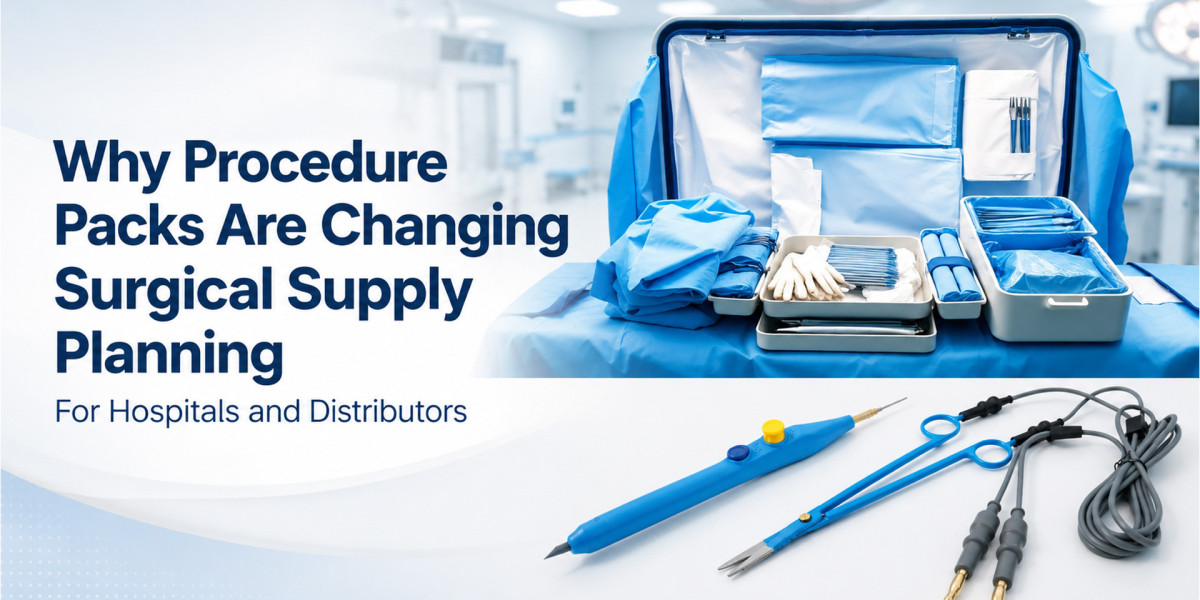

How custom surgical kits can help healthcare buyers organise components, improve quotation clarity and support repeat procurement
Surgical procurement often becomes complicated when buyers need multiple instruments, accessories and consumables for the same procedure. A hospital may request electrosurgical instruments, forceps, bipolar products, diathermy accessories, electrode pads, cables and plugs through separate enquiries, while a distributor may need to combine these items into a more practical offer for customers. This is where procedure packs can create a more structured sourcing conversation.
Procedure packs help hospitals, clinics and medical distributors organise related surgical components into a defined purchasing format. When pack contents, quantities, packaging expectations and documentation needs are clearly agreed, procedure packs can support more efficient sourcing, clearer quotations and more repeatable purchasing discussions.
Why Surgical Buyers Are Looking for More Organised Supply Models
Healthcare procurement teams rarely want unnecessary complexity. When related products are sourced separately, buyers may have to manage multiple quotations, repeated documentation requests and disconnected supplier conversations. Procedure packs can help reduce this fragmentation by bringing required components into a defined kit structure.
For healthcare buyers planning custom surgical kits, Cosil Instruments’ procedure pack range supports conversations around component planning, sterile surgical kit requirements and procurement-led pack discussions.
Procurement insight: A strong procedure pack enquiry should include a clear component list, quantity per pack, packaging expectations, documentation needs, destination market and expected order volume.
What Can Be Reviewed for a Procedure Pack?
Procedure pack requirements vary depending on the buyer, department, procedure type and purchasing model. A pack discussion may include surgical instruments, electrosurgical accessories, diathermy products and related components that need to be organised into a repeatable purchasing format.
- Electrosurgical instruments for surgical departments and healthcare procurement teams.
- Electrosurgical forceps where insulated forceps are required within a wider kit.
- Bipolar forceps for buyers reviewing standard, single-use or specialist bipolar instrument options.
- Diathermy electrodes for electrosurgical accessory requirements.
- Diathermy cautery pencils for connected surgical accessory needs.
- Electrode pads and return electrode options where applicable.
- Diathermy cables and plugs for connection-related requirements.
- Surgical accessories needed for a defined procedure or supply programme.
Why Procedure Packs Can Help Hospitals and Clinics
Hospitals and clinics may benefit from procedure pack discussions when the required components are consistent, the purchasing pattern is repeatable and the internal review process requires organised product details. A defined pack can help buyers approach sourcing with greater clarity.
Clear Component Planning
Procedure packs encourage buyers to define exactly what is needed, including product categories, quantities, packaging expectations and documentation requirements. This helps reduce uncertainty during quotation and internal review.
More Practical Purchasing Conversations
Instead of discussing each product separately, procurement teams can present a complete requirement to the supplier. This can make the sourcing conversation more efficient, especially when electrosurgical instruments and diathermy accessories are part of the same request.
Better Repeat Procurement
When a pack configuration is clearly defined, repeat purchasing conversations can become more straightforward. Buyers should still review requirements regularly to confirm that pack contents remain suitable for their internal needs.
Why Procedure Packs Matter for Medical Distributors
For medical distributors, procedure packs can support a more organised offering to hospitals and clinics. A defined kit configuration may be easier to explain, quote and repeat when the customer has a consistent requirement.
Distributors should work with suppliers that can support clear product communication, practical pack discussions, documentation requests and responsive quotation handling. This matters when procedure packs include connected surgical products such as forceps, diathermy electrodes, cautery pencils, electrode pads, cables or plugs.
Distributor insight: Procedure packs are easier to present when the supplier provides clear component information, practical documentation support and responsive communication around quantities, packaging and repeat orders.
How to Prepare a Procedure Pack Enquiry
A procedure pack quotation is only as strong as the information provided at the enquiry stage. Buyers and distributors should prepare a clear, structured request before approaching a supplier.
- Component list: Define the instruments, accessories and consumables required.
- Quantity per pack: Confirm how many units of each component should be included.
- Packaging expectations: Clarify pack format, labelling preferences and handling requirements where known.
- Order volume: Share expected quantities and repeat purchasing expectations.
- Documentation needs: Request product details and quality information required for internal review.
- Destination market: Provide delivery location and any distributor-led customer requirements.
Where Electrosurgical Products Fit into Procedure Packs
Many procedure pack discussions involve electrosurgical products. Buyers may need forceps, bipolar instruments, diathermy accessories, electrodes, electrode pads, cables or plugs as part of a broader kit. Discussing these products early helps reduce delays and supports a more complete quotation.
Healthcare buyers reviewing connected product categories can also explore electrosurgical instruments alongside procedure pack requirements when planning grouped surgical sourcing.
Common Mistakes Buyers Should Avoid
- Requesting a procedure pack quotation without a clear component list.
- Leaving packaging expectations unclear until late in the process.
- Failing to confirm documentation needs before internal review.
- Not identifying whether the pack is for direct use or distributor supply.
- Ignoring related accessories such as cables, plugs, electrode pads or forceps.
- Comparing supplier responses without checking whether the same components are being quoted.
Supplier-side perspective: Procedure pack discussions move faster when buyers provide a complete pack structure, realistic order expectations, documentation requirements and any customer-specific distributor needs from the beginning.
FAQs About Procedure Pack Sourcing
What is a procedure pack?
A procedure pack is a defined set of surgical components organised into a purchasing format based on the buyer’s requirements. Contents, quantities, packaging expectations and documentation needs should be agreed before quotation.
Can procedure packs include electrosurgical accessories?
Yes. Procedure packs may include electrosurgical accessories when they are part of the buyer’s defined kit requirement, such as forceps, electrodes, cautery pencils, electrode pads, cables or plugs.
Are procedure packs useful for distributors?
Yes. Distributors may use procedure pack configurations to support customers with recurring surgical supply needs, provided the contents and purchasing expectations are clearly defined.
What should buyers prepare before requesting a procedure pack quotation?
Buyers should prepare the component list, quantity per pack, packaging expectations, expected order volume, destination market and documentation requirements.
Final Thoughts
Procedure packs can make surgical procurement more structured when the required components, quantities, packaging preferences and documentation needs are clearly defined. For hospitals, clinics and distributors, the value comes from better planning, clearer quotations and more organised supplier conversations.
Build stronger procedure pack enquiries by defining components, quantities, packaging expectations, documentation needs and repeat purchasing requirements early.